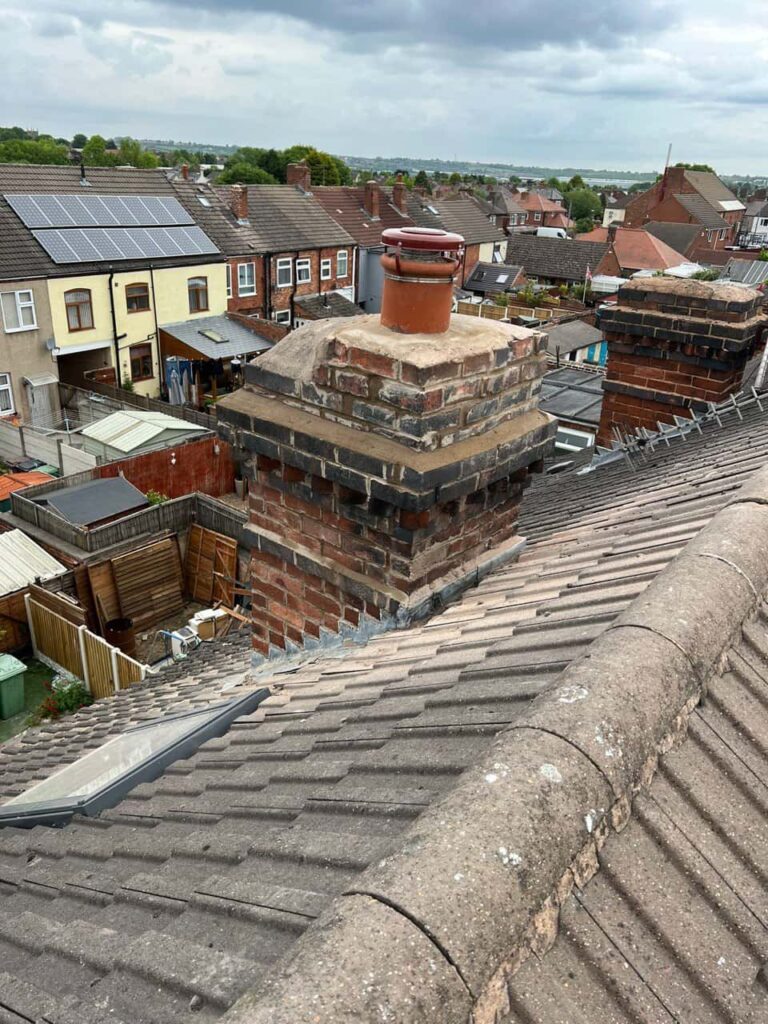
Chimneys are an important part of many properties in Wednesbury, West Midlands, but they can become a source of roof problems when they are not properly maintained. Because a chimney passes through the roof, defects around the structure can allow rainwater to enter and cause damage to surrounding roofing materials.
Understanding the most common chimney problems can help homeowners recognise warning signs early and arrange suitable repairs before a minor defect develops into a more serious roofing issue.
How Chimney Problems Can Affect Your Roof
A chimney is exposed to changing weather conditions throughout the year. Rain, wind, frost and general ageing can gradually affect the brickwork, mortar, flashing and chimney components.
When these areas deteriorate, water may find a route into the roof space. Damp patches, staining and damaged timber can then develop around the affected area. In some cases, problems may remain hidden until they have caused considerable damage.
Regular inspection is therefore useful, particularly when there are visible signs of deterioration around the chimney.
Damaged or Cracked Mortar Joints
The mortar between chimney bricks can deteriorate over time. Cracked, loose or eroded joints can allow moisture to penetrate the chimney structure.
Small areas of damaged mortar may sometimes be repaired through repointing. This involves removing defective mortar and replacing it with suitable new material. Addressing deteriorating joints can help protect the brickwork and reduce the amount of moisture reaching the roof structure.
Cracked or Damaged Chimney Pots
Chimney pots can become cracked, loose or damaged through prolonged exposure to weather. A damaged pot may allow water to enter the chimney, while loose components can become unstable.
A professional inspection can establish whether the chimney pot needs repair, replacement or additional attention. Keeping these components secure also helps prevent damage to nearby roof areas.
Faulty Chimney Flashing
Flashing forms a watertight junction between the chimney and the roof. It is one of the most important areas to check when investigating a chimney-related roof leak.
Over time, flashing can become loose, cracked, lifted or separated from the surrounding materials. When this happens, rainwater can enter beneath the flashing and reach the roof structure.
Signs of a possible flashing problem include damp patches around the chimney inside the property, water staining in the loft or visible gaps around the chimney base.
Damaged Leadwork
Lead is commonly used around chimney junctions because it can form a durable weatherproof seal. However, leadwork can deteriorate, become displaced or develop splits over time.
Poorly maintained leadwork can create gaps where water can enter. Repairs may involve securing existing sections or replacing damaged areas, depending on the condition of the installation.
Chimney Masonry Damage
Bricks can crack, loosen or become weathered as a chimney ages. Frost can be particularly damaging when moisture enters small cracks and expands during freezing conditions.
Damaged masonry should not be ignored. Loose bricks or sections of deteriorating chimney can affect the surrounding roof and may require professional attention to prevent further deterioration.
Blocked or Damaged Chimney Areas
A chimney that is no longer regularly used can still require maintenance. Openings and defective areas can allow rainwater to enter, while poor ventilation may contribute to damp conditions.
Any work around an unused chimney should take account of the condition and construction of the existing roof and chimney. A proper inspection can identify whether repairs or other protective measures are appropriate.
Signs Your Chimney May Need Repairs
Homeowners should look out for:
- Water staining around the chimney inside the property
- Damp patches in the loft or upper rooms
- Cracked or missing mortar
- Loose or damaged bricks
- Cracked chimney pots
- Gaps or damage around flashing
- Deteriorated leadwork
- Visible movement or damage to chimney components
These signs do not always indicate the same underlying problem, which is why identifying the source of the damage is important before carrying out repairs.
Professional Chimney and Roof Repairs in Wednesbury
If your chimney is showing signs of damage, Wednesbury Roofing Repairs can inspect the affected area and identify problems that may be allowing water into the roof. From damaged flashing and leadwork to deteriorating mortar and chimney masonry, appropriate repairs can help protect the surrounding roof structure.
Professional attention is particularly useful where the cause of a leak is not immediately obvious, as water can travel from the original entry point before becoming visible inside the property.
If you have noticed chimney damage, dampness or signs of a roof leak, contact Wednesbury Roofing Repairs to arrange an inspection and discuss the repairs required.
Conclusion
Chimney problems can affect more than the chimney itself. Damaged mortar, masonry, flashing, leadwork and chimney pots can all create potential routes for water to reach the roof structure.
By dealing with visible defects and investigating signs of water ingress promptly, homeowners in Wednesbury, West Midlands can help protect their roofs from avoidable deterioration. If you are concerned about the condition of your chimney or the surrounding roof, Wednesbury Roofing Repairs can assess the problem and provide suitable repair work.
Call us on: 0121 827 1893
Click here to find out more about Wednesbury Roofing Repairs
Click here to complete our contact form and see how we can help with your roofing needs.