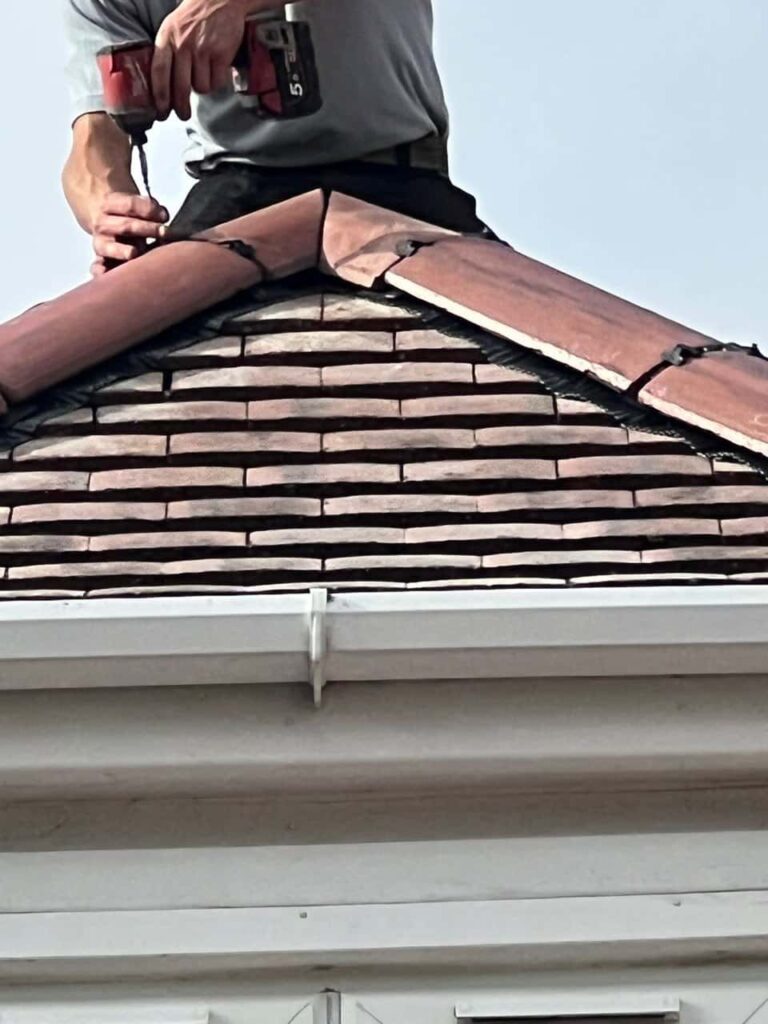
A roof leak can begin with a surprisingly small defect. A slipped tile, damaged flashing or weakness around a roof junction may allow only a limited amount of water to enter initially, but the consequences can become more extensive when moisture continues to penetrate during repeated rainfall.
For homeowners in Wednesbury, West Midlands, dealing with a roof leak promptly is important because the visible drip or ceiling stain may only represent part of the problem. Water can travel through the roof construction, reaching timbers, insulation and ceiling materials before becoming obvious inside the property. Finding and repairing the source early can help limit this continued exposure and keep the necessary work focused on the actual defect.
Why Early Roof Leak Repair Protects More Than the Roof Covering
The external roof covering is the property’s primary defence against rainfall, but several materials sit beneath it. Once water passes through a defect, it can move beyond the immediate entry point and affect components that were never intended to experience repeated moisture.
Prompt investigation is therefore not simply about stopping an inconvenient drip. It is about preventing an isolated roofing weakness from developing into a wider problem.
Small Roof Defects Can Allow Water Beneath the Covering
Water ingress does not always begin with substantial visible roof damage.
A relatively small defect can create a route beneath tiles or slates. Possible sources include displaced roofing materials, damaged flashing, deterioration around junctions and weaknesses within valleys or other detailed areas.
The amount of water entering may initially be modest, particularly during brief rainfall. However, repeated exposure can allow moisture to progress further into the roofing system.
Repairing the defect while it remains localised can help prevent this continuing cycle.
Water Does Not Always Appear Directly Below the Leak
One of the reasons roof leaks can affect several materials is that water can travel after entering.
It may follow the slope of the roof, move along underlay or track across structural components before eventually dripping. The internal stain may therefore be some distance from the original external defect.
This is why effective roof leak repair begins with accurate diagnosis.
Treating only the area directly above a damp ceiling without establishing the actual entry point can leave the original problem unresolved.
Roof Timbers Depend on Remaining Protected From Rainfall
Roof timbers form important parts of the supporting structure and are normally protected by the roofing materials above them.
When a leak develops, water can reach rafters, battens and other timber components. A brief isolated exposure does not automatically indicate serious deterioration, but persistent or recurring moisture deserves attention.
If timber repeatedly becomes wet without adequate opportunity to dry, its condition can gradually be affected.
Stopping water ingress promptly reduces continued exposure and allows the surrounding area to be assessed before the problem progresses further.
Battens Can Be Hidden From View
Roof battens support tiles or slates but are largely concealed once the roof covering is installed.
This means deterioration associated with water ingress may not be obvious from outside.
Where a leak has been active for some time, inspecting relevant supporting components can help determine whether the problem extends beyond the visible covering.
Simply replacing a damaged tile may not be sufficient if the support beneath it has also been affected.
Insulation Can Conceal the Extent of a Leak
Insulation can make some roof leaks less immediately obvious.
Water entering the roof space may reach insulation before becoming visible on the ceiling below. Depending on the location and circumstances, moisture can remain within or around the material while the room beneath initially shows only limited evidence.
Consequently, the first visible ceiling mark does not necessarily indicate when the leak started.
Prompt investigation helps establish whether moisture has reached insulation and whether the affected area needs further attention.
Wet Insulation May Not Perform as Intended
Roof insulation is designed to work in appropriate conditions.
If it becomes significantly affected by water ingress, its condition and effectiveness may be compromised. Simply stopping the external leak does not automatically mean that everything beneath it should be assumed to be unaffected.
The surrounding insulation should be considered when investigating a persistent roof leak.
This is particularly important where water ingress has continued through several periods of rainfall or where the exact duration of the problem is unclear.
Ceiling Stains Are Often a Late Warning Sign
A ceiling stain can sometimes be the first indication a homeowner receives that the roof is leaking.
However, water has already travelled through part of the roof construction before reaching the ceiling surface.
The stain should therefore be regarded as evidence of water ingress rather than the complete problem itself.
Even a relatively small mark deserves attention when it appears after rainfall or continues returning. Waiting until dripping becomes substantial can allow more moisture to pass through the roof.
Repeated Moisture Can Affect Ceiling Materials
Ceiling materials are not intended to receive water from above.
When moisture repeatedly reaches the same area, staining can become more pronounced and the affected section may begin showing visible deterioration. The extent depends on how much water is entering, how frequently the leak occurs and how long it remains unresolved.
Stopping the leak at its source is the priority.
Internal symptoms can then be assessed once the route allowing water into the property has been addressed.
Prolonged Rain Can Make Hidden Problems More Obvious
Some roof leaks only become noticeable during sustained rainfall.
A small defect may allow moisture through slowly, meaning a short shower produces no obvious internal signs. During prolonged rain, however, water has more time to enter and travel through the roofing system.
Materials around the leak may also remain wet for longer because there is less opportunity for drying between periods of rainfall.
A leak that only appears during extended wet weather should therefore not be dismissed as insignificant.
Repeated Wetting Can Increase the Affected Area
A roof leak may initially involve a very small section of the external covering.
If water continues entering, the area exposed to moisture can gradually become larger. Water may travel further along underlay, reach additional insulation or affect a wider section of the ceiling.
This is one of the main reasons prompt roof leak repair is valuable.
Addressing the problem early can help keep attention focused on the original defect rather than allowing repeated water ingress to create additional areas requiring investigation.
Dry Weather Does Not Mean the Leak Has Repaired Itself
Roof leaks are frequently intermittent.
A ceiling stain may dry completely when the weather improves, giving the impression that the problem has disappeared. In reality, the external defect may remain unchanged.
When similar rainfall conditions return, water can enter through the same route again.
Repeated cycles of wetting and drying are a strong reason to investigate the roof rather than waiting for the symptoms to become more severe.
Finding the True Source Prevents Repeated Water Ingress
Prompt action is useful only when the correct area is repaired.
Because water can travel, accurate leak detection is an important part of protecting the materials beneath the roof. The external covering, flashing, valleys, junctions, underlay and surrounding areas may need consideration depending on the location and pattern of the leak.
A successful repair should stop water where it enters rather than merely deal with where it eventually appears.
This approach reduces the likelihood of recurring moisture continuing to affect timbers, insulation and ceilings.
Previous Repairs Should Be Considered
Where a roof has leaked before, previous repair areas can provide useful information.
The earlier work may remain completely sound, with the latest leak originating somewhere else. Alternatively, recurring moisture around the same section may indicate that the original source was not fully identified.
Assuming that every new damp mark has the same cause can lead to unnecessary or ineffective repairs.
A fresh assessment of the complete affected area is generally more useful.
Prompt Inspection Can Help Keep Repairs Localised
Finding a roof leak does not automatically mean extensive roofing work is required.
If the defect is identified early and surrounding components remain sound, repair work may be able to concentrate on a relatively small area. The objective should always be to retain serviceable roofing materials where appropriate.
Delaying investigation can make this more difficult because repeated water ingress may affect materials beyond the original defect.
Early diagnosis therefore helps determine the actual extent of the problem before assumptions are made about the work required.
Signs That a Roof Leak Should Be Investigated
Some leaks are obvious, while others provide more subtle warnings. Reasons to arrange an inspection can include:
- New or recurring ceiling stains
- Dampness within the roof space
- Dripping during rainfall
- Moisture appearing after prolonged rain
- Damp insulation
- Visible slipped or damaged roofing materials
- Water marks around roof timbers
- A musty or persistently damp roof-space area
- Previous leak repairs followed by returning symptoms
These signs do not automatically indicate widespread deterioration. They show that water may be reaching areas where it should not and that the source deserves investigation.
Why Professional Roof Leak Detection Matters
A professional inspection looks beyond the first visible symptom.
At Wednesbury Roofing Repairs, we consider where moisture is appearing, how water could be travelling and which external roofing components may be responsible. The surrounding roof covering and accessible internal areas can then be assessed to understand whether the problem remains localised.
This diagnostic approach is important because a technically sound repair in the wrong location will not stop the water ingress.
Finding the cause first provides a clearer basis for carrying out appropriate repair work.
Protecting the Roof as a Complete System
Tiles, slates, underlay, battens, timbers and internal materials should not be viewed entirely separately when dealing with water ingress.
They form different layers of the same building envelope. A weakness at the external surface can eventually affect components much further inside if rainfall continues to penetrate.
Prompt roof leak repair protects these materials by restoring the roof’s ability to keep water outside.
The earlier this happens, the less opportunity moisture has to spread beyond the original problem.
Conclusion
Prompt roof leak repairs can help protect roof timbers, insulation and ceilings by stopping repeated water ingress before it has the opportunity to affect a wider area. Even a small external defect can allow moisture to travel beneath the roof covering, and the first visible ceiling stain may appear only after water has already passed through other materials.
The most important step is identifying the true source of the leak rather than simply treating the internal symptom. Once the cause is understood, repair work can be directed towards the area that genuinely requires attention while surrounding materials are checked where necessary.
If you have noticed a roof leak, damp roof space or recurring ceiling stain at your property in Wednesbury, West Midlands, contact Wednesbury Roofing Repairs. We can investigate the source of the water ingress and recommend appropriate repair work to help protect the roof and the materials beneath it.
Call us on: 0121 827 1893
Click here to find out more about Wednesbury Roofing Repairs
Click here to complete our contact form and see how we can help with your roofing needs.